

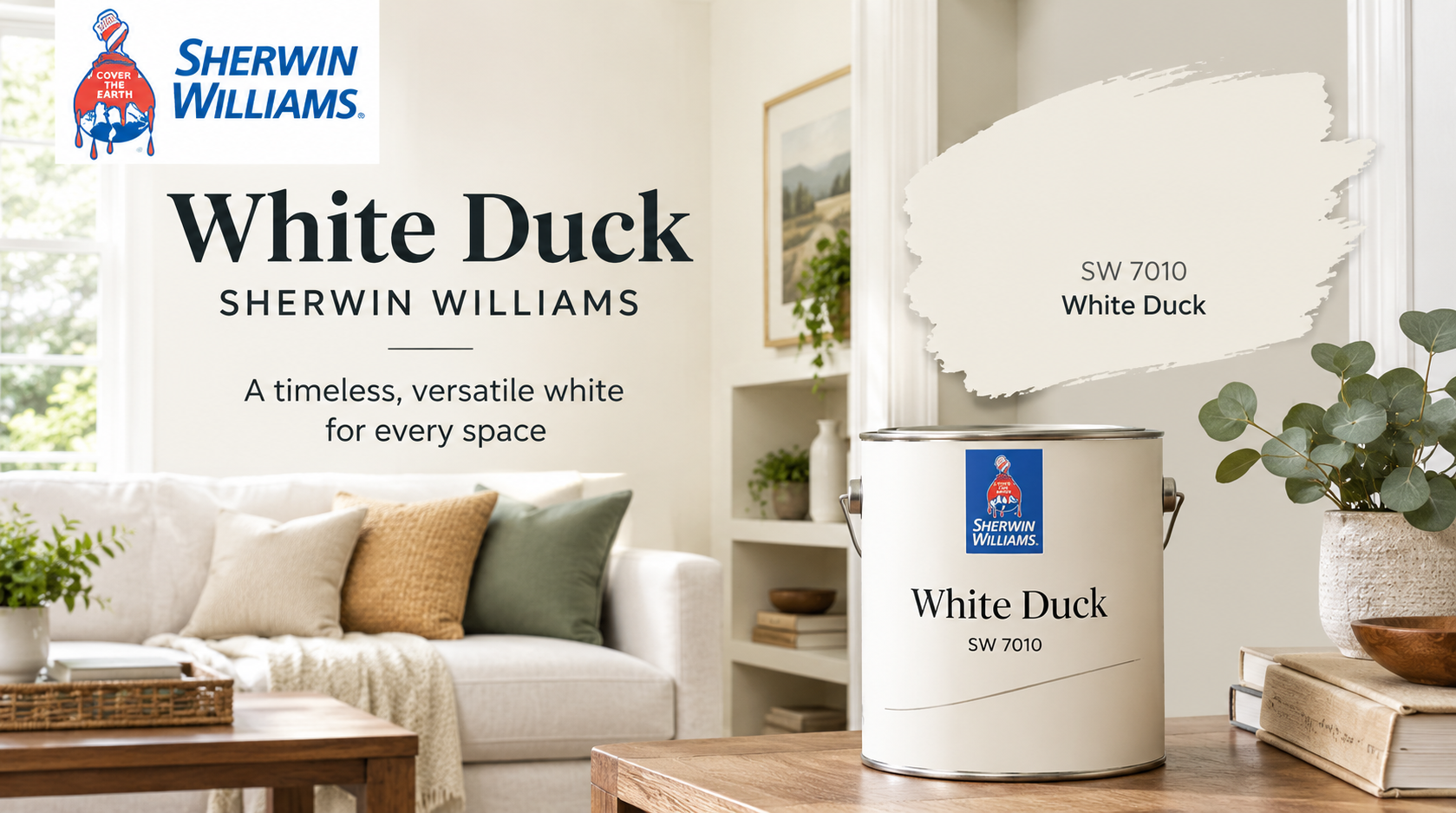
When choosing a white paint color, the biggest surprise is how different “white” can look from one room to another. Some whites feel crisp and cool, while others have a soft, creamy character that makes a space feel more comfortable. White Duck by Sherwin-Williams (SW 7010) belongs to the second category, offering a warm, subtle neutral that works beautifully in a wide range of interiors.
White Duck is especially appealing to homeowners who want something softer than a bright white without moving all the way into beige. It can create a relaxed backdrop in living rooms, bedrooms, kitchens, hallways, and other areas where a calm and timeless appearance is desired.
What Is White Duck by Sherwin-Williams?
White Duck is a warm off-white paint color from Sherwin-Williams. Rather than looking stark or extremely bright, it has a gentle warmth that gives walls a more welcoming appearance. This makes it an interesting alternative to traditional cool whites and stark designer whites.
The color is often described as a creamy neutral because it sits comfortably between white and light beige. That balance is one of its biggest strengths. White Duck can look clean and sophisticated while still retaining enough warmth to prevent a room from feeling sterile.
Its appearance can also change throughout the day. Natural sunlight, artificial lighting, flooring, furniture, and nearby wall colors can all influence how the paint looks. For this reason, seeing a sample in your own room is much more reliable than judging the color from a screen.
Why Is White Duck So Popular?
The popularity of White Duck comes largely from its versatility. Many homeowners want white walls but dislike the cold appearance that some modern whites can produce. White Duck offers a softer solution.
It works particularly well with natural materials. Warm wood floors, oak furniture, woven textures, linen fabrics, stone surfaces, and earthy accessories can all complement its gentle undertones.
Another advantage is that White Duck does not demand a specific decorating style. It can work with modern farmhouse interiors, transitional rooms, contemporary spaces, traditional homes, and relaxed minimalist designs.
A Soft Alternative to Bright White

Bright white paint can make a room look fresh and spacious, but it may sometimes feel too sharp. White Duck creates a slightly more relaxed effect.
This makes it useful for homeowners who want an airy room without sacrificing warmth. The walls can remain light while still feeling connected to the rest of the home’s color palette.
A Neutral Without Feeling Plain
Neutral paint does not have to be boring. White Duck provides a quiet background that allows furniture, artwork, lighting, and decorative details to receive attention.
Because the color is relatively understated, it can support both colorful accents and monochromatic designs without competing with them.
Understanding the Undertones of White Duck
Undertones are extremely important when selecting a neutral paint color. Two shades may appear almost identical on a paint chip but look completely different once they cover an entire wall.
White Duck has warm characteristics that can become more noticeable under certain lighting conditions. In a room with warm bulbs and natural wood, it can appear especially creamy and inviting. In cooler natural light, its appearance may feel more restrained.
This is why the same paint color can look different in a north-facing bedroom compared with a bright south-facing living room.
How Natural Light Changes the Color
Morning sunlight can make White Duck appear lighter and warmer, while afternoon light may bring out different aspects of its neutral character. Rooms with limited daylight can also make the shade feel deeper.
The amount of sunlight is not the only factor. Trees outside the windows, neighboring buildings, curtains, and even surrounding landscaping can influence reflected light.
For a major painting project, it is smart to test White Duck on several walls and observe it at different times of the day.
White Duck in Living Rooms
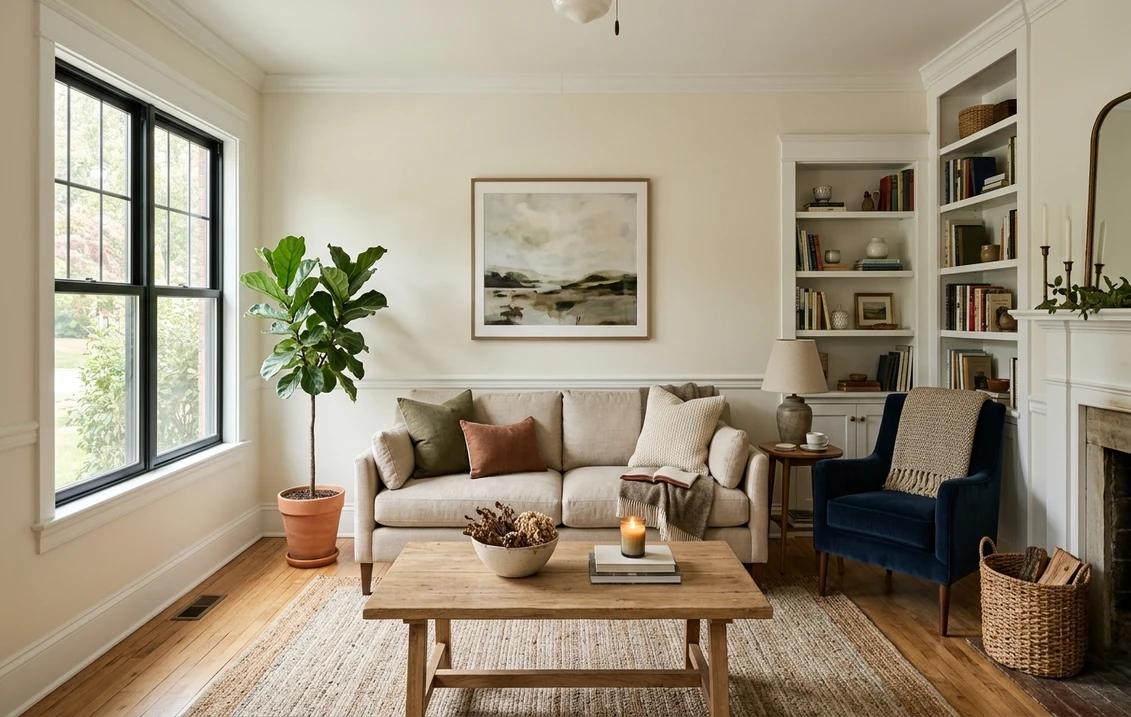
White Duck can be an excellent choice for a living room because it provides a soft backdrop for comfortable furniture and natural textures.
Imagine the color alongside a cream sofa, medium-tone wood coffee table, woven basket, muted green plants, and warm metal accents. The result can feel relaxed rather than overly formal.
It also works well in open-plan homes. Since the color is neutral, it can help connect the living room with nearby dining and kitchen areas without creating a visually busy transition.
Using White Duck in Kitchens
Kitchen walls and cabinets require slightly different considerations because countertops, backsplashes, flooring, and cabinet finishes all affect the overall palette.
White Duck can complement warm white cabinetry, natural wood, creamy quartz, beige stone, and other earthy finishes. It can also soften kitchens that contain a lot of hard surfaces.
For homeowners considering White Duck cabinets, sample testing becomes particularly important. Cabinet paint receives different light throughout the day and interacts closely with countertops and backsplashes.
White Duck With Wood Cabinets and Floors
One of the most attractive combinations is White Duck with natural wood. Oak, walnut, light wood, and medium-toned timber can create a warm and balanced interior.
The subtle warmth of the paint helps prevent the wood from looking disconnected from the walls. Instead, the two materials can work together as part of a cohesive neutral palette.
White Duck for Bedrooms
Bedrooms often benefit from warmer neutrals because they create a restful atmosphere. White Duck can provide a gentle foundation for bedding, curtains, rugs, and upholstered furniture.
It pairs naturally with soft beige, taupe, cream, muted green, dusty blue, and warm gray accents. These combinations can create a bedroom that feels calm without becoming completely monochromatic.
The color can also work well in children’s bedrooms when paired with natural wood and subtle accent colors, allowing the room to grow with the child.
Is White Duck a Good Exterior Paint Color?
White Duck can also be considered for exterior applications, although exterior light behaves very differently from indoor lighting.
Strong sunlight can make a warm off-white appear significantly brighter. Meanwhile, shadows may make it look more substantial and creamy.
The surrounding roof color, brick, stone, trim, landscaping, and orientation of the house all matter. A sample should therefore be viewed outside before committing to the entire exterior.
White Duck can be especially attractive on homes featuring natural stone, warm brick, wood accents, or dark architectural details.
White Duck vs. Other White Paint Colors
Choosing between white paint colors can be difficult because small differences in warmth and undertone can have a noticeable effect.
White Duck generally appeals to people who want a warmer, softer appearance rather than a crisp, icy white. It can feel more relaxed than some very bright whites while remaining lighter and cleaner than traditional beige.
White Duck vs. Pure White
Sherwin-Williams Pure White is widely recognized as a versatile white with a cleaner appearance. White Duck, by comparison, generally feels warmer and creamier.
If your goal is a crisp, contemporary look, Pure White may be more appealing. If you want a softer neutral with additional warmth, White Duck may be worth considering.
White Duck vs. Alabaster
Alabaster is another popular Sherwin-Williams neutral white. Both colors have warmth, but they can create different impressions depending on lighting and surrounding finishes.
White Duck can feel slightly more grounded and neutral in certain environments, while Alabaster often gives interiors a soft, creamy white appearance. Testing both samples side by side is the best way to determine which works with your home.
What Colors Pair Well With White Duck?
One of the strongest qualities of White Duck is its ability to work with a broad range of complementary colors.
Warm beige, taupe, earthy green, muted blue, terracotta, natural brown, charcoal, and soft black can all create attractive combinations. The ideal pairing depends on the mood you want to establish.
For a calm organic interior, combine White Duck with wood, linen, greenery, and warm neutrals. For a more contemporary look, introduce black accents, clean-lined furniture, and simple metallic finishes.
How Lighting Affects White Duck
Lighting deserves special attention when selecting any off-white paint.
Warm LED bulbs can emphasize the creamy side of White Duck, while cooler bulbs can make it appear more neutral. Natural daylight can also change significantly depending on the direction of the room.
A sample viewed under showroom lighting tells you very little about how the color will behave in your actual home. Painting a large sample area and observing it from morning through evening gives a much more realistic impression.
Tips for Testing White Duck Before Painting
Before purchasing enough paint for an entire house, test the shade. A small sample can prevent an expensive mistake.
Place the sample near flooring, countertops, trim, cabinets, and furniture. Look at it in both natural and artificial light. Avoid judging the color only when standing directly beside it; view it from different parts of the room as well.
If possible, leave the sample in place for several days. A color that looks perfect in morning sunlight may feel different at night, and those changes are important when choosing a whole-room color.
FAQs
Is White Duck a true white?
No. White Duck is better described as a warm off-white or soft neutral rather than a stark, pure white.
Is White Duck warm or cool?
White Duck generally reads as a warm neutral, although its appearance can change depending on lighting and surrounding colors.
Does White Duck work with wood?
Yes. Its warm neutral character can pair especially well with natural wood floors, cabinetry, and furniture.
Is White Duck good for small rooms?
Yes. Its light, soft appearance can help a small room feel open while avoiding the harshness that some bright whites create.
Should I test White Duck before painting?
Absolutely. Paint samples can look dramatically different depending on natural light, artificial lighting, flooring, and nearby colors.
Conclusion
White Duck Sherwin-Williams is a versatile choice for anyone looking for a warm, sophisticated alternative to stark white. Its soft neutral character makes it adaptable enough for living rooms, bedrooms, kitchens, and even exterior applications. The key is to test the color in your own lighting and alongside your existing finishes. When those elements work together, White Duck can provide the comfortable, timeless backdrop that makes a home feel effortlessly inviting
